

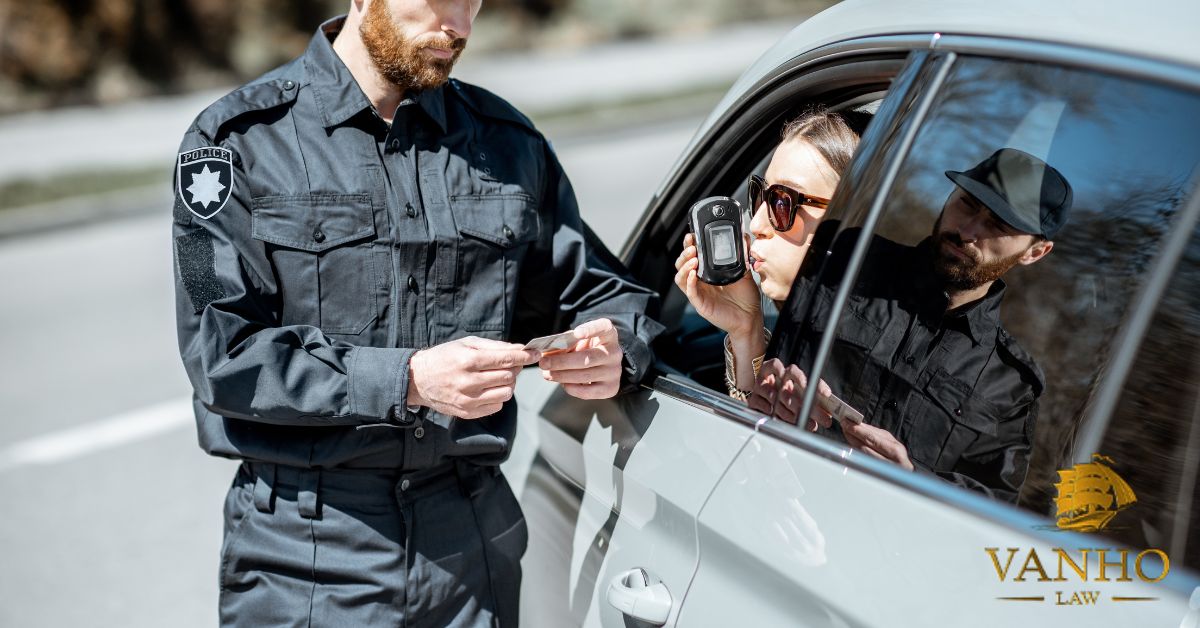
You have been pulled over. The officer thinks you have been drinking. Now you are being asked to blow into a machine that measures the alcohol in your breath. Should you do it?
This is one of the hardest choices a driver can face in Ohio. Unlike the roadside balance tests, a breathalyzer test is tied to a special Ohio law, and saying no has real costs. But saying yes has real costs too. This article explains how it works, what happens if you refuse, and the risks on both sides. It is meant to help you understand your choices. It is not legal advice for your own case. If you are arrested for drunk driving, you should talk to a lawyer as soon as possible.
Two Different “Breath Tests”
First, it helps to know there are really two kinds of breath tests, and they are not the same.
- The roadside handheld test. This is a small handheld device an officer may pull out during a traffic stop, before any arrest. In Ohio, this roadside handheld test is usually treated like the other roadside tests — it is voluntary, and you can politely decline it. Its main job is to help the officer decide whether to arrest you.
- The station breath test. This is the big, official machine at the police station or jail, used after you are under arrest. This is the one that counts as the real evidence, and this is the one covered by Ohio’s implied consent law. This article is mostly about this test.
Ohio’s Implied Consent Law
Ohio has a law called implied consent. It says that just by driving on Ohio roads, you have already agreed to take an official chemical test — usually a breath test — if you are lawfully arrested for drunk driving. In Ohio, drunk driving is called “OVI,” which stands for Operating a Vehicle Impaired.
Because you “agreed” in advance, the law lets the state punish you for refusing. You can still say no. But refusing has its own penalties, separate from the criminal case.
There are also some important rules about the test itself:
- The officer must read you a written warning about what happens if you refuse.
- You generally must take the test within two hours of the time you were driving. Waiting too long counts as a refusal, even if you never actually said no.
- In the most serious cases — for example, a driver with past OVI convictions — the law can even allow police to use reasonable force to take a blood sample.
What Happens If You Refuse
Refusing the official breath test causes an automatic driver’s license suspension. This is called an Administrative License Suspension, or ALS. It happens right away, at the time of arrest, before you are ever found guilty of anything. You also have to pay a fee to get your license back later. You do have the right to challenge the suspension, but it starts immediately.
How long is the suspension? It depends on your history over the past ten years:
- First refusal: about a one-year suspension.
- If you had one prior refusal or OVI in the last ten years: about a two-year suspension.
- If you had two priors: about a three-year suspension.
- If you had three or more priors: about a five-year suspension.
Here is a key point many people do not know: refusing usually leads to a longer suspension than failing the test. If you take the test and are over the limit, the automatic suspension for a first offense is much shorter — around three months. So refusing does not make the license problem go away. It often makes it worse.
There are more downsides to refusing:
- Your refusal can be used against you in court. A prosecutor is allowed to tell the judge or jury that you refused, and to argue that you refused because you knew you were drunk.
- You can still be convicted. Refusing does not stop the case. The state can still use how you drove, your appearance, your speech, the smell of alcohol, and the roadside tests to prove you were impaired.
- A refusal with a past OVI can be a more serious charge. If you have a prior OVI conviction within the last twenty years and you refuse, Ohio treats that refusal as part of a separate, more serious offense that carries a longer mandatory minimum jail time than a regular OVI. In that situation, refusing can actually increase your criminal punishment.
What Happens If You Take the Test and Fail
Taking the test has its own serious risks. In fact, a failed breath test is some of the strongest evidence the state can have.
1. It Can Prove Guilt All by Itself
Ohio has what is called a “per se” law. This means that if your breath alcohol level is at or above the legal limit, you can be found guilty of OVI just from that number — even if you were driving perfectly fine. The state does not have to prove you were actually impaired. The number does the work.
2. The Result Is Hard to Fight
Ohio law treats the approved breath machines as reliable. Because of this, you generally cannot argue in court that these machines just don’t work as a general matter. Even when experts raise real concerns about a particular model, Ohio courts have said drivers cannot attack the machines in general. That makes a breath result very powerful and hard to knock out.
3. You Can Only Challenge Specific Problems
You are still allowed to challenge things that went wrong in your specific case. For example, a lawyer may be able to question:
- Whether the machine was properly maintained and calibrated on schedule.
- Whether the officer running the test was properly trained and permitted.
- Whether the correct steps and timing were followed.
- Whether something specific made your result wrong.
But these are narrow, technical challenges. They usually require a lawyer and sometimes an expert, and they do not always succeed.
4. Real Things Can Make the Number Too High
Breath machines are not perfect. Several everyday things can push a reading higher than your true alcohol level:
- Alcohol left in your mouth, from a recent drink, mouthwash, or breath spray.
- Burping, belching, or acid reflux (GERD), which can bring alcohol up from your stomach into your mouth right before you blow.
- Timing. Alcohol you drank recently may still be rising in your system, so the reading may not match what was in your blood while you were actually driving.
- Machine or calibration errors, if the device was not properly checked and serviced.
To guard against some of this, the officer is supposed to watch you for a set period before the test to make sure you do not put anything in your mouth. But mistakes happen, and proving one after the fact is not easy.
Weighing the Choice
This is the hard part. With the breathalyzer, there is no risk-free answer.
- If you refuse: you face an automatic license suspension that is usually longer than the one for failing, your refusal can be used against you in court, and if you have a past OVI, refusing can lead to more jail time. But you also avoid handing the state a hard number that can prove guilt by itself.
- If you take it and pass: you may avoid an OVI charge based on your alcohol level, though you can still be charged based on other signs of impairment.
- If you take it and fail: you give the state very strong evidence that is difficult to challenge.
Because the stakes are high either way, this is a decision where knowing the rules ahead of time really matters.
Practical Tips If You Are Pulled Over
- Stay calm and be polite. This helps you no matter what you decide.
- Know the difference between the voluntary roadside handheld device and the official station test that is covered by implied consent.
- Understand that refusing the official test is not a free pass. It causes an automatic license suspension, can be used against you in court, and can mean more jail time if you have a prior OVI.
- Remember the two-hour rule. Waiting too long can count as a refusal.
- Ask to speak with a lawyer as soon as you can. Because there is no easy answer, real advice about your own situation is valuable.
The Bottom Line
In Ohio, you can refuse the official breath test, but refusing triggers an automatic license suspension that is often longer than the penalty for failing, and it can be used against you in court. Taking the test, on the other hand, can hand the state a number that proves guilt almost by itself and is hard to fight. Neither choice is simple or free of risk.
The best protection is to understand these rules before you are ever in that situation, to stay calm and polite if you are stopped, and to talk to a lawyer about your specific case as soon as possible.
If you or a loved on is charged with Operating a Vehicle Under the Influence (OVI / DUI), you need an aggressive and intelligent attorney fighting your case. Attorney Adam VanHo and VanHo Law have represented individuals charged with OVI all across Ohio. As one of Ohio's most respected attorneys, Adam has been able to deliver excellent results for his clients.
Contact VanHo Law at (330) 653-8511 or click here if you need to discuss your situation with a skilled attorney.