
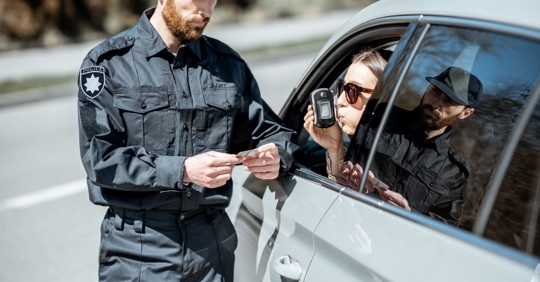
Imagine you are driving home at night. You see flashing lights behind you. A police officer pulls you over. After a few questions, the officer says that he would like you to step out and do a few simple tests. These are called field sobriety tests. Should you do them?
This article explains what these tests are, whether you have to take them in Ohio, and the many reasons why taking them can be risky. It is meant to help you understand your choices. It is not legal advice for your own case. If you are charged with drunk driving, you should talk to a lawyer.
What Are Field Sobriety Tests?
Field sobriety tests are short physical tasks the officer asks you to do on the side of the road. The officer watches how you move and looks for “clues” that you might be impaired. In Ohio, there are three main tests that police are trained to use:
- The eye test. The officer moves a pen or finger side to side and watches your eyes. The officer is looking for a certain jerking motion in your eyes. You cannot feel this motion, and you cannot control it.
- The walk-and-turn test. You take nine steps heel-to-toe in a straight line, turn a certain way, and walk back. The officer counts every small mistake.
- The one-leg stand test. You stand on one foot, about six inches off the ground, and count out loud while the officer watches your balance.
These tasks may sound easy. But they are harder than they look, and the officer is trained to score them strictly.
Do You Have to Take These Tests in Ohio?
In Ohio, field sobriety tests are voluntary. That means you can politely decline them. Ohio courts have recognized this, and officers sometimes even tell drivers they have the right to refuse. There is no separate driver’s license suspension just for saying no to these roadside tests.
This is very different from a chemical test, which is a breath, blood, or urine test that measures alcohol or drugs in your body. Chemical tests are usually given at the police station or a hospital after an arrest.
The Big Difference: Roadside Tests vs. Chemical Tests
This is the part many people get confused about, so it is worth explaining clearly.
Ohio has a law called implied consent. It says that by driving on Ohio roads, you have already agreed to take a chemical test if you are lawfully arrested for drunk driving (called “OVI” in Ohio, which stands for Operating a Vehicle Impaired). If you refuse that chemical test after your arrest, the state can suspend your driver’s license right away. That penalty is automatic and separate from the criminal case.
Implied consent only covers the chemical test. It does not cover the roadside field sobriety tests. So:
- Refusing the roadside field sobriety tests does not, by itself, cause an automatic license suspension.
- Refusing the chemical test after arrest can cause an automatic license suspension.
Understanding this difference matters. The roadside tests and the chemical test are not the same thing, and the rules for refusing them are not the same.
Why Taking the Field Sobriety Tests Is Risky
Even though the roadside tests are voluntary, many people do them anyway because they feel pressured or want to seem cooperative. But there are many reasons why taking them can hurt you. Here are the main risks.
1. The Officer Decides If You Pass or Fail
You do not get a clear score you can check. The officer watches you and decides whether you “passed” or “failed.” This judgment is subjective, which means it depends on the officer’s opinion. Two officers could watch the same person and see things differently.
2. The Tests Are Designed to Be Hard
These tests ask you to do unnatural things, like walking a perfect straight line heel-to-toe or standing on one leg for 30 seconds. The officer counts small slip-ups as “clues” of impairment. Things like stepping off the line, using your arms for balance, or starting too soon can all be marked against you, even if you are completely sober.
3. Medical and Physical Conditions Can Cause You to Fail
Many normal health conditions can make you do poorly, even with no alcohol at all. These include:
- Back, leg, knee, hip, or foot problems
- Inner ear problems that affect balance
- Neurological or muscle conditions
- Eye conditions that affect the eye test
- Injuries, including any you just got in a car accident
The officer is not required to know your medical history, and the tests may not be adjusted for your condition. So a real health problem can look like impairment.
4. Age and Weight Can Affect Your Performance
The training officers use warns that older people and people who are significantly overweight often have trouble with the balance tests, even when sober. If this describes you, the tests may be stacked against you from the start.
5. Nervousness and Fear Make It Worse
Being pulled over is stressful. Flashing lights, a stern officer, and the fear of getting in trouble can make anyone shaky, forgetful, and clumsy. That nervousness can look like impairment to an officer, even though it is a normal reaction.
6. Poor Testing Conditions Work Against You
You are not taking these tests in a calm, controlled room. You are on the side of a road, often at night, in bad conditions. These conditions can hurt your performance:
- Uneven ground, gravel, slopes, or potholes
- Poor lighting or the glare of headlights
- Rain, snow, ice, cold, or wind
- Passing traffic that is loud and distracting
None of these things mean you are impaired, but they can all make you stumble or lose your balance.
7. Your Shoes Can Trip You Up
The shoes you happen to be wearing matter. High heels, boots, sandals, flip-flops, or slippery-soled shoes can throw off your balance. You are usually tested in whatever you are already wearing.
8. You Usually Get One Try, and the Instructions Come Fast
The officer explains the tasks quickly and then expects you to follow the directions exactly. If you misunderstand a direction, start at the wrong time, or forget a step, that can be marked as a “clue.” You do not get a practice round.
9. Everything You Do Becomes Evidence
This is one of the biggest risks. The whole point of these tests, from the officer’s side, is to gather evidence against you. Your performance is often recorded on the officer’s body camera or dash camera. What the officer sees can be used to arrest you, and it can be shown to a judge or jury later.
Here is an important point about Ohio law: even if a court later throws out the “results” of the tests because the officer did not follow the rules correctly, the officer can still testify in court about what they saw you do, like swaying, stepping off the line, or losing your balance. So doing the tests can create evidence against you that is hard to erase, even when the tests were not given properly.
What Refusing the Tests Could Still Mean
Refusing the roadside tests is not a magic shield. It is important to be honest about this so you can make a smart choice.
- You can still be arrested. The officer can use other things to arrest you, such as how you were driving, the smell of alcohol, red or glassy eyes, slurred speech, or open containers in the car. In Ohio, the officer can also treat your refusal to do the tests as one factor pointing toward an arrest.
- Your refusal can be mentioned in court. Ohio courts have allowed the fact that a driver refused the roadside tests to be used as evidence at trial.
- The chemical test is separate. Even if you decline the roadside tests, if you are arrested you will still face the choice about the chemical test, which carries its own automatic license penalty for refusing.
So refusing the roadside tests may keep you from creating certain evidence, but it does not guarantee you will avoid arrest or charges.
Practical Tips If You Are Pulled Over
- Stay calm and be polite. Being respectful helps you no matter what you decide.
- Give the officer your license and basic information when asked.
- Know that the roadside tests are voluntary. If you choose to decline, you can say so politely and calmly.
- Remember that the chemical test is a different decision with different consequences, including a possible license suspension for refusing it after arrest.
- Ask to speak with a lawyer as soon as you can. A lawyer can explain your rights and help protect you.
The Bottom Line
In Ohio, field sobriety tests are voluntary.
They may feel like a simple way to show you are fine, but they are built to find reasons to arrest you, and they are easy to fail even when sober. Health problems, age, weight, nerves, bad weather, poor lighting, your shoes, and one-shot instructions can all work against you. And whatever you do during the tests can become evidence, sometimes even if the tests were done wrong.
Many people are surprised to learn how risky these tests can be. Knowing your rights before you are ever pulled over helps you make a calm, informed choice. When in doubt, be polite, and talk to a lawyer.
Attorney Adam VanHo of VanHo Law has represented clients all across Ohio facing OVI / DUI offenses. As one of Ohio's most respected attorneys, he has the experience to assist you through the process of navigating an arrest and court case involving Operating a Vehicle Under the Influence.
If you or a loved one is facing a charge of Driving While Intoxicated (Operating a Vehicle Under the Influence), contact VanHo Law at (330) 653-8511 or contact us here.